I’ve been inside the baby clothing industry for almost two decades, and lately, something interesting has been happening: more and more baby brands—big and small—are shifting toward matching clothing sets. Tops with bottoms. Hat, sock boots, gloves.Romper sets. Seasonal sets. Coordinated looks. It’s popping up everywhere, and it’s not just a trend for “cute photos.” There’s a much deeper reason behind why brands are pivoting this way.
Baby clothing brands are creating matching sets because sets help improve visual branding, raise average order value, reduce returns, and simplify inventory planning. Coordinated outfits sell better on social media, making them ideal for 2026 consumer behavior. Sets also reduce production waste, simplify photoshoots, and help new brands look professional with fewer SKUs. For B2B buyers, matching sets offer stable fabric usage, predictable MOQ planning, and faster development cycles.
From my perspective as a manufacturer, matching sets aren’t just a trend—they’re becoming the new standard. Let’s break down why brands across North America, Australia, and Europe are quickly adopting them.
Why Are Baby Clothing Brands Switching to Matching Sets in 2026?
If you spend time scrolling through Instagram or TikTok, you’ll notice how parents love coordinated looks. But the shift toward matching sets goes far beyond “cute factor.” Today’s new parents want easy, no-brainer outfits, while brands want stable production and reliable sales. Matching sets quietly solve both sides’ problems.
Brands are switching to matching sets because they perform better on social media, reduce decision fatigue for parents, lower return rates, and build a more cohesive collection with fewer designs.
The Influence of Social Media
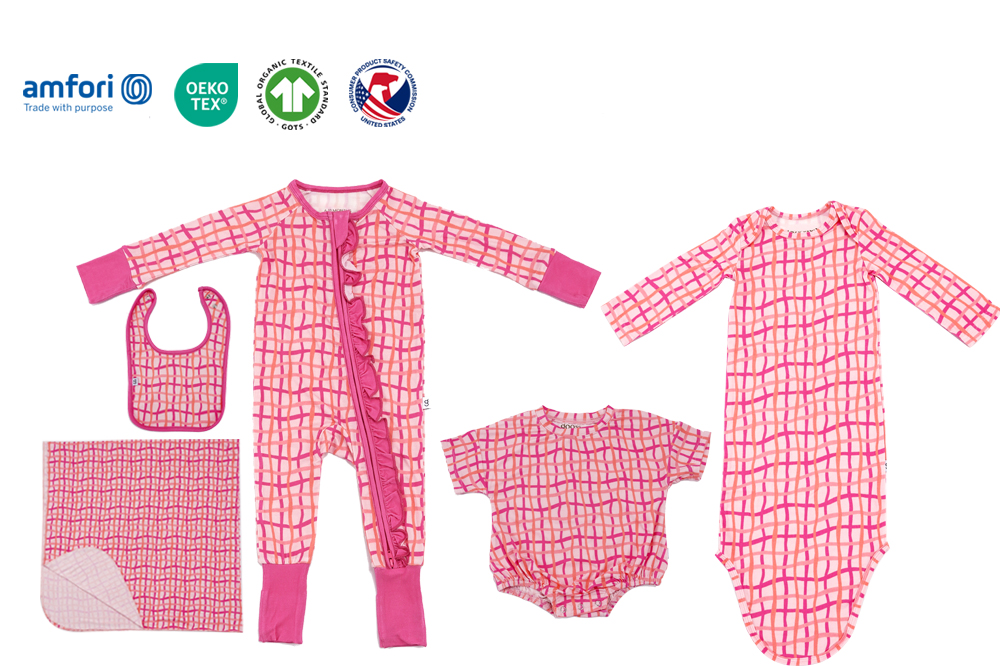
Matching sets photograph beautifully. On TikTok, a simple “Get Ready With Me – Baby Edition” can go viral because sets instantly look put-together. A single coordinated outfit tells a whole style story, which is why many brands use sets to anchor their photo and video content.
Parents are also overwhelmed—between work, feeding schedules, and sleepless nights—so easy styling wins. Sets remove the “What should the baby wear today?” question entirely.
Inventory Stability for Brands
One of the things buyers rarely talk about—but feel constantly—is the stress of inventory management. Coordinated sets help with that:
- Fewer SKUs needed
- Predictable fabric consumption
- Easier restocks
- Reduced mismatch issues
A single set can do the work of 2–3 separate items. For small to mid-size brands, this means less warehouse chaos and fewer leftover colors that no one wants.
Reduced Returns
When tops and bottoms are sold separately, parents sometimes mix the wrong sizes, which leads to returns. Sets reduce that risk. One purchase, one size, one outfit—done. And when return rates drop, profit margins rise.
Design Consistency
As a manufacturer, I’ve seen brands struggle with consistency:
one fabric here, another there, slightly different dyes, multiple textures—it can look disconnected.
Matching sets bring harmony. Designers create a clear color story. Buyers see a cohesive collection. Customers feel the aesthetic.
When coordinated sets appear on a brand homepage, the entire storefront looks more premium—even if the SKU count is small.
Do Matching Sets Help Brands Boost Profit Margins and Customer LTV?
In short: yes. And the effect is bigger than most new brands expect. Sets naturally raise AOV, but the real magic is in how they shape buying behavior and repeat purchasing.
Matching sets increase margins because they raise order value, simplify marketing content creation, make collections look more premium, and encourage parents to come back for seasonal upgrades.
Higher AOV (Average Order Value)
Let’s be honest: selling a $9.90 onesie is tough. But selling a $22 matching set? Much easier. Customers perceive more value for the price, and sets feel more “worth it.”
This is why many 2026 startups are launching their first drops with sets—it instantly helps meet revenue targets.
Easier Marketing
When shooting singles, you need multiple angles, backgrounds, and retouching steps. With sets, everything looks good instantly. One shoot → multiple images → multiple ads. That’s why so many brands rely on sets to stretch their marketing budgets.
Repeat Purchases
Parents love consistency.
If they buy one set and love it, they’ll come back for the same silhouette in new colors.
That’s how customer LTV grows—not through random designs, but reliable patterns that repeat each season.
Manufacturing Efficiency
From a factory perspective, sets reduce waste.
Same fabric. Same dye. Same batch.
Everything matches and production is faster.
This lowers cost for brands—and helps avoid the nightmare of:
“Why are the pants slightly different from the top?”
What Types of Baby Clothing Sets Will Trend in 2026?
2026 is shaping up to be a year of simple, calm, and soft aesthetics. Parents are choosing clothing that feels natural, comfortable, and easy to match.
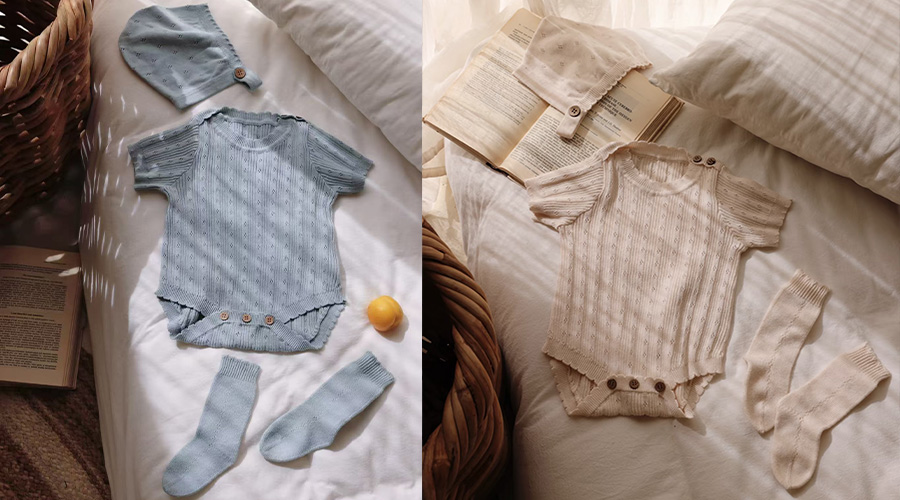
Trending 2026 sets include organic cotton rib sets, bamboo lounge sets, seasonal matching sets, textured knitted sets, and 3-piece bundles with hats or bibs.There are even matching mother-child outfits.
Organic Cotton Rib Sets
These continue to dominate. They’re soft, breathable, and easy on sensitive skin. The rib texture adds dimension without raising costs.
Bamboo Matching Sets
Brands love bamboo for its drape, softness, and eco-friendly appeal. 2026 will see more pastel bamboo sets, especially for newborn collections.
Seasonal Sets
- Easter
- Christmas
- Fall neutral sets
- Winter knit sets
Parents love buying sets as gifts, especially for seasonal photos.
3-Piece Sets
Hats, mittens, bibs—bundle items will be strong because they raise perceived value.
How Can Start-Up Baby Brands Use Sets to Build a Strong Collection?
You don’t need a huge catalog to look professional. Many brands become “Instagram-ready” with less than 20 SKUs when using sets.
Start-up brands can use matching sets to reduce photoshoot cost, simplify collection planning, and build an aesthetic identity quickly.
The Power of Visual Consistency
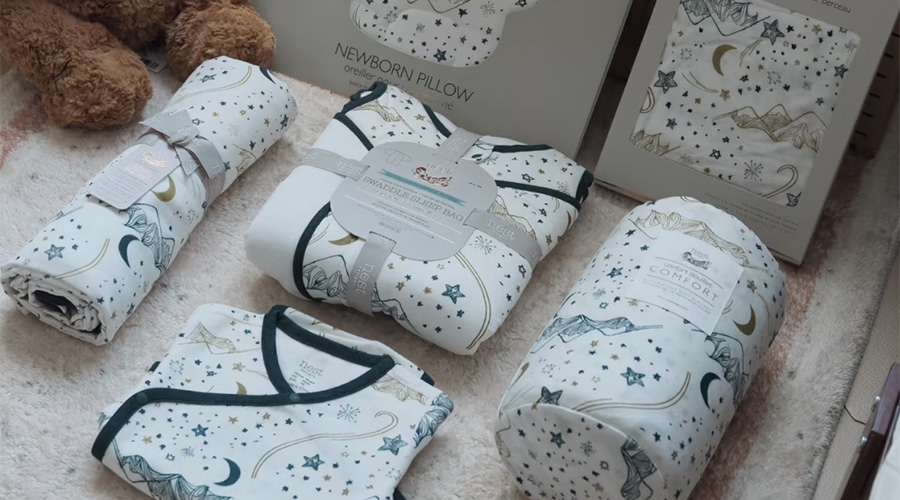
Sets make a new brand look instantly cohesive.
One color palette → one fabric family → one clean aesthetic.
Lower Photoshoot Burden
Instead of shooting 30 single pieces, you shoot 10 sets.
Efficiency goes way up.
Easier Wholesale Pitching
Retailers love matching sets. They’re faster to display, easier to bundle, and more giftable.
What Should Buyers Consider When Developing Sets with a Manufacturer?
Not all sets are equally easy to produce. To avoid delays, brands must align early with the manufacturer.
Buyers should confirm fabric shrinkage, color consistency, MOQ per color, packaging method, and production timeline before starting a matching set project.
Fabric & Shrinkage
Ask for pre-wash tests.
Sets must shrink evenly—tops and bottoms can’t misalign.
Dye Batch & Color Consistency
Insist on same-batch dyeing.
Different batches → different tones → unhappy customers.
MOQ Planning
Because sets require matching colors, plan your MOQ accordingly.
Packaging
Decide between:
- Folded together
- Individually packed
- Bundle packaging
Each affects customer experience.
Conclusion
Matching sets aren’t just cute—they’re practical, profitable, and perfect for 2026 baby brands. If you’re planning your next collection, sets might be the smartest starting point.