I’ve noticed a clear pattern over the years. Many baby clothing brands don’t stop at babywear. At some point, their customers ask the same question: “Do you have kids sizes?” That moment—when a baby brand starts thinking about kidswear—is exciting, but also risky. Choosing the right kids clothing manufacturer can make this expansion smooth, or painfully expensive.
Baby brands often expand into kidswear to increase customer lifetime value and grow collections naturally. Working with a kids clothing manufacturer experienced in baby-to-kids transitions helps brands manage sizing changes, fabric consistency, MOQs, and seasonal planning. Manufacturers who already produce baby clothing are better positioned to support this growth with lower risk and smoother production.
From a manufacturing point of view, moving from baby to kids is not a big leap—but only if it’s done with the right planning and the right partner.
Why Are Baby Brands Expanding into Kids Clothing?
This shift doesn’t happen randomly. It usually comes from customers growing with the brand. Babies turn into toddlers, toddlers turn into kids, and parents prefer to stay loyal.
Baby brands expand into kids clothing to retain customers, increase repeat purchases, and build a stronger brand lifecycle.
From what I’ve seen, most baby brands don’t plan to become kids brands at the beginning. It happens naturally.
Parents trust a brand that worked well for their newborn. When their child grows, they don’t want to start over with an unknown label. This is where kidswear becomes a natural next step.
But here’s the mistake many brands make:
they treat kidswear as a completely separate project.
In reality, baby-to-kids expansion works best when:
- fabrics stay consistent
- colors evolve gradually
- sizing increases logically
A kids clothing manufacturer who already understands babywear construction knows how to:
- adjust patterns for movement
- maintain softness
- balance durability with comfort
This avoids the “too stiff” or “too rough” feedback that often happens when baby brands jump straight into standard kidswear factories.
What Should Brands Look for in a Kids Clothing Manufacturer?
Not every kids clothing manufacturer is suitable for baby brands. The needs are different, and so are the risks.
Brands expanding from baby to kids should choose a kids clothing manufacturer experienced in soft fabrics, low MOQs, and gradual size grading.
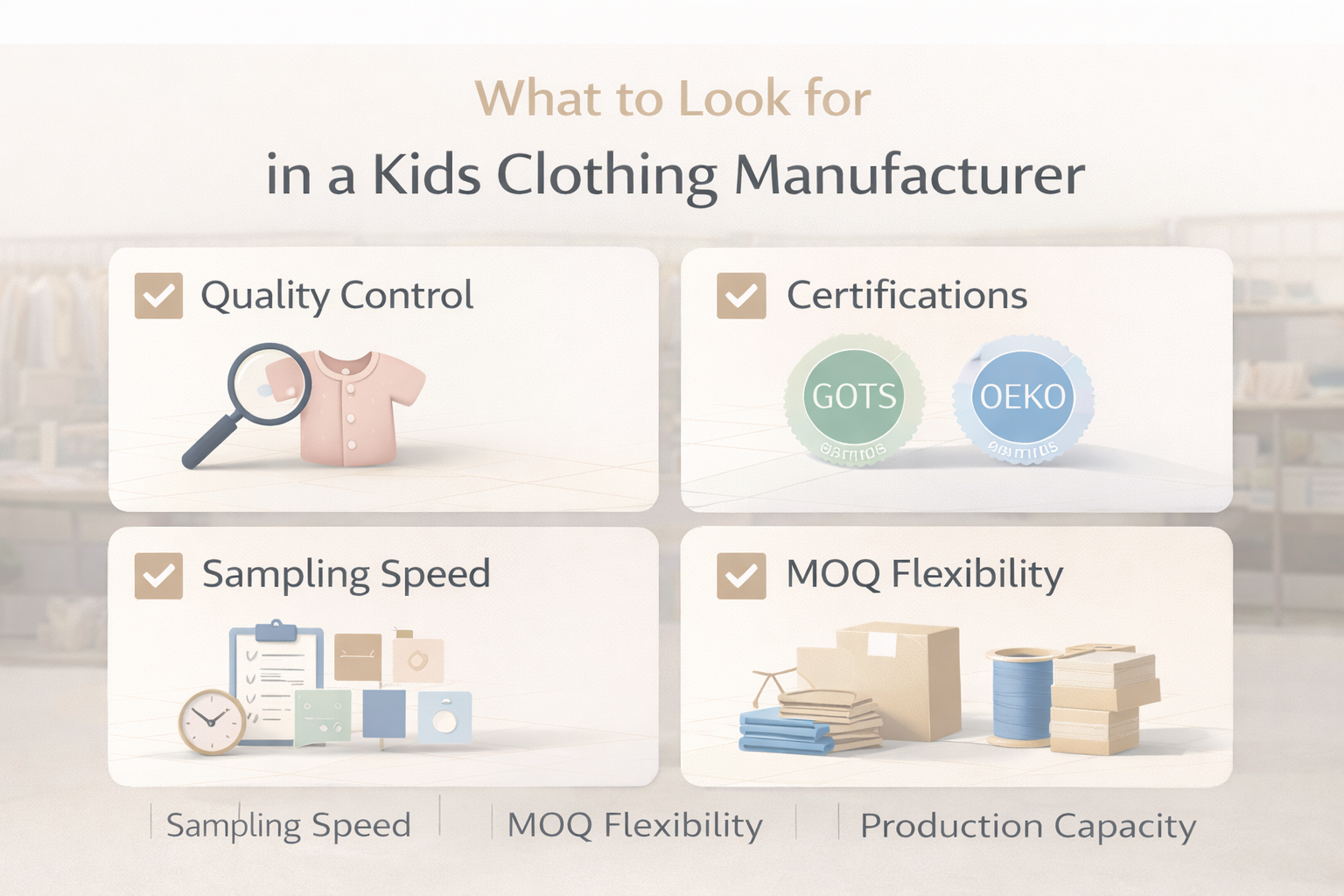
The key things I always recommend brands check:
Experience with Baby-to-Kids Transition
Ask directly:
Have they produced both baby and kids styles before?
Factories that only do kidswear often prioritize durability over comfort. Baby brands usually need both.
Fabric Familiarity
Materials like:
- organic cotton
- bamboo
- cotton blends
should already be familiar to the manufacturer.
MOQ Flexibility
Expansion collections should be tested, not overproduced.
Low MOQ support is critical.
You can explore more about staged production here:
small batch kids clothing production
How Does Manufacturing Change from Baby to Kids Sizes?
Sizing is where many brands underestimate complexity.
Kids clothing manufacturing requires stronger seams, adjusted patterns, and more movement allowance compared to babywear.
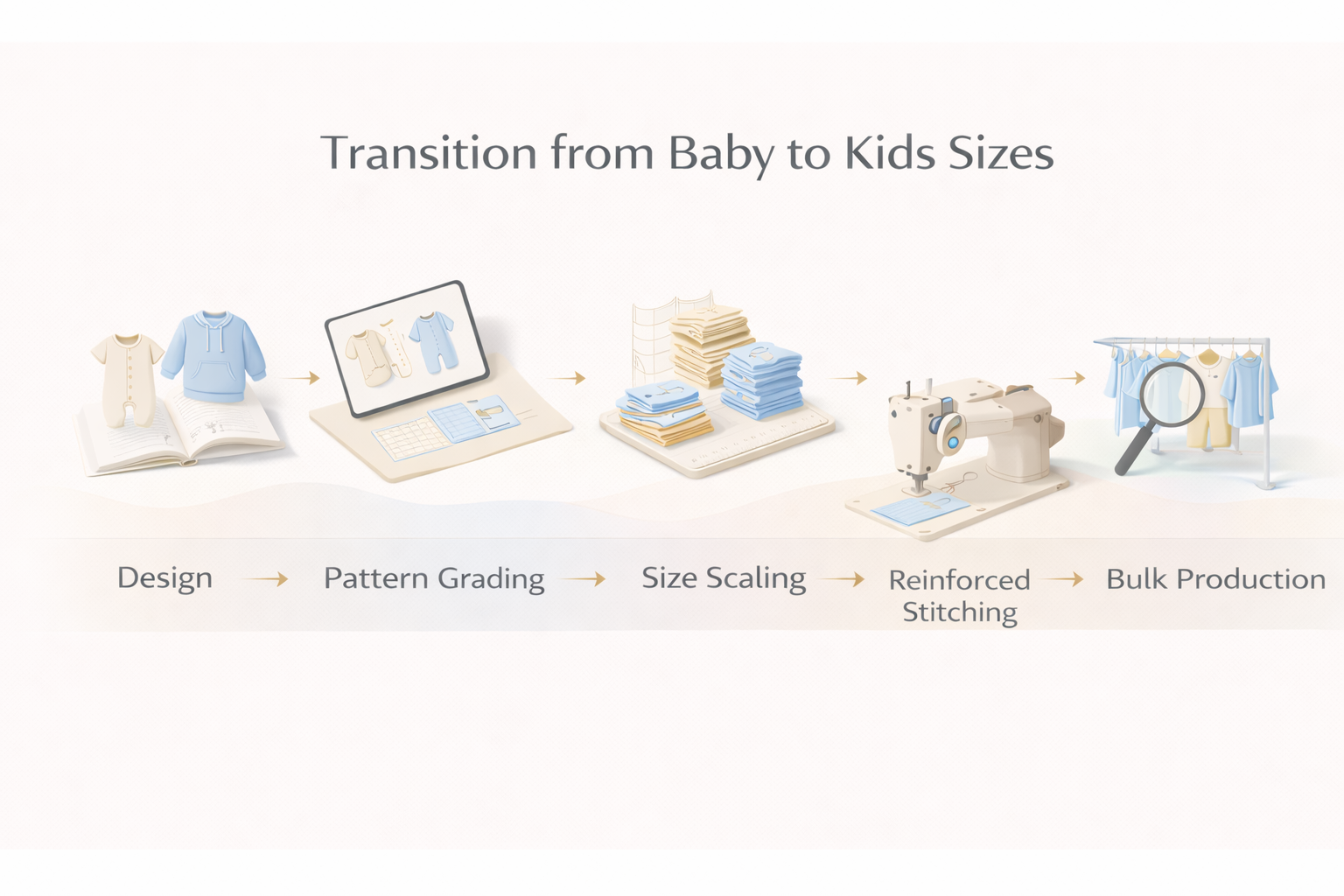
Kids move more. They crawl, run, fall, and repeat.
That means:
- reinforced stitching
- adjusted fabric weight
- better elastic recovery
A baby-focused manufacturer who also handles kidswear understands how to strengthen garments without losing softness.
Conclusion
Expanding from baby to kidswear is a natural growth step. With the right kids clothing manufacturer, brands can extend their collections smoothly while protecting quality and brand identity.